What does it take to rethink a universal EV foundation?
Inside a new product launch: EV Utility


While EV infrastructure rollout is accelerating, civils works often create project bottlenecks.
For installers and specifiers, these below-ground infrastructure challenges can slow deployment and introduce unnecessary complexity.
So, what happens when you step back and rethink the approach to EV foundations?
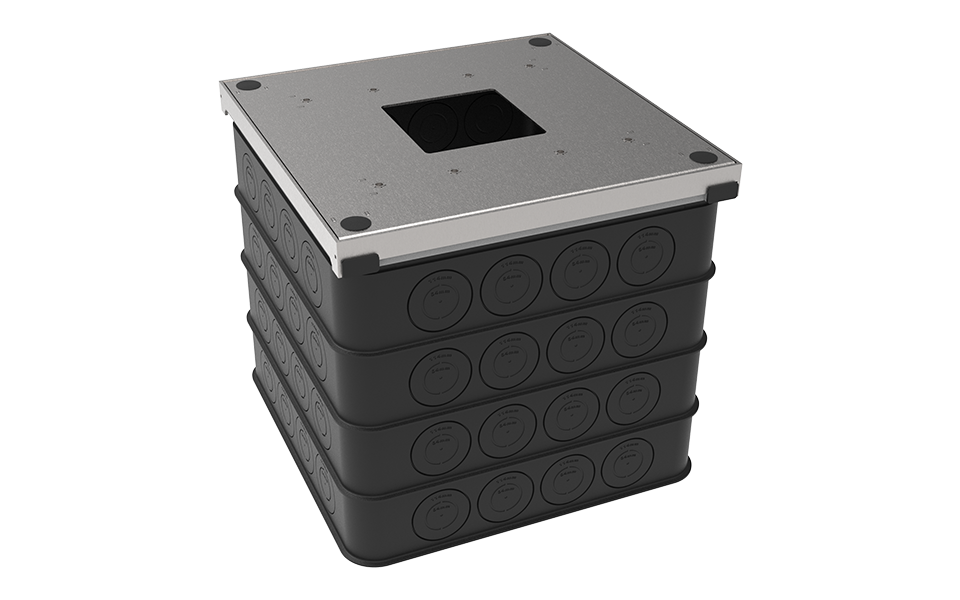
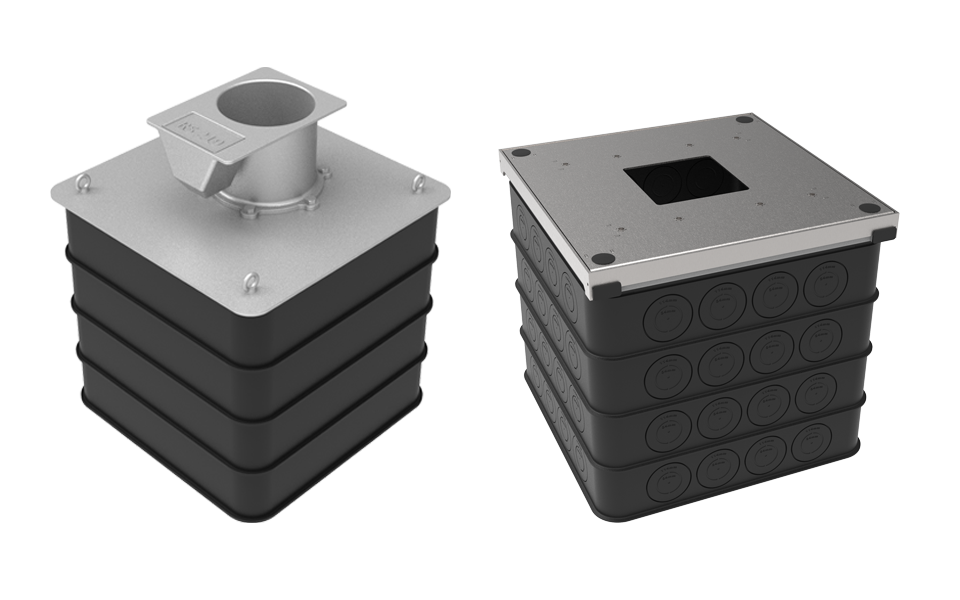
The development of the EV Utility solution set out to do exactly that. Our new solution offers a lightweight, simplified, and standardised universal EV foundation comprising a composite chamber system with a bespoke adaptor plate.
To understand how this came together, we gathered three key internal perspectives on the development process. Here, you’ll meet our Head of Innovation, Product Designer, and EV Sector Manager. Each brought a different lens to the same challenge:
How do you simplify EV foundation installation, without compromising performance?
Meet James Gallagher, Head of Innovation
First, we spoke to James to understand how the R&D process shaped EV Utility.
Q: What challenges were you seeing with traditional EV foundation approaches?
EV technology has developed quickly over the past few years. However, EV infrastructure – i.e., the civils works around charge point foundations – hasn’t always matched that pace.
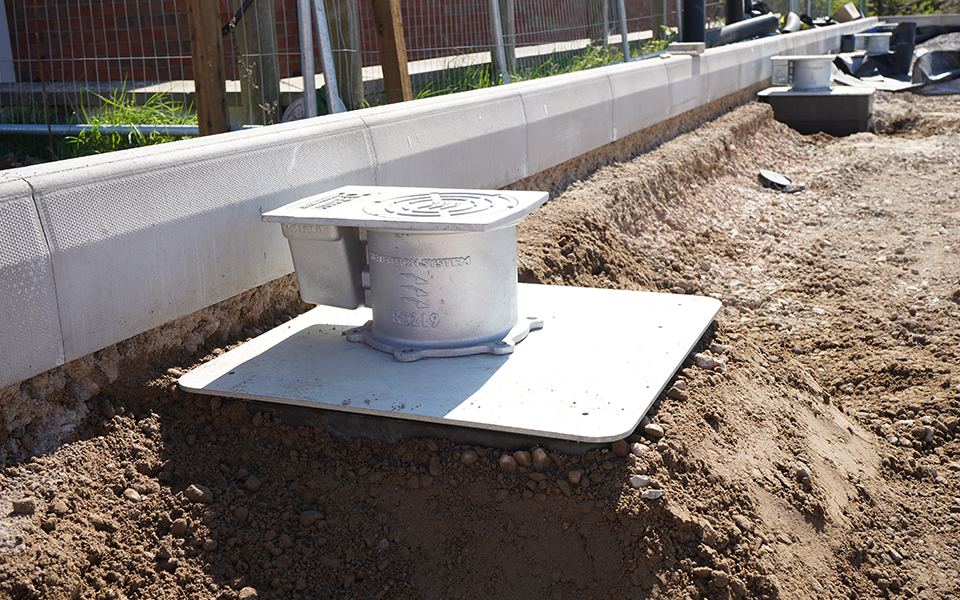
Installers were often working with concrete foundations. This will usually mean either the mess and delay of wet trades, or the carbon footprint, weight, and lifting expense of pre-cast blocks. While other solutions exist – a fantastic example being the NAL universal retention socket foundation – they can present a more premium option compared to concrete alternatives.
These various installation and cost challenges inevitably slow EV deployment.
We also saw challenges around cable entry. Some foundation designs can restrict access or make cable pulling more difficult, which adds time and frustration during installation.
So, the opportunity was to rethink foundations from an installer-first perspective. We focused on simplifying the design while still delivering the performance required for EV infrastructure, and expected from NAL as the market leader.
Q: Why was a standardised approach such a big focus?
Standardisation is becoming increasingly important in EV rollout.
Consider the variety of charging hardware available, and how rapidly it upgrades. When you're deploying multiple chargers across multiple sites, you want repeatability.
If each installation requires a different configuration, that then adds time, complexity, and risk.
So, by developing a simplified universal foundation approach, we’ve created a solution that supports multiple charger configurations from multiple manufacturers using a single, easy system.
That repeatability helps specifiers standardise designs and allows installers to work more efficiently across projects.
Q: How did you approach installation and usability?
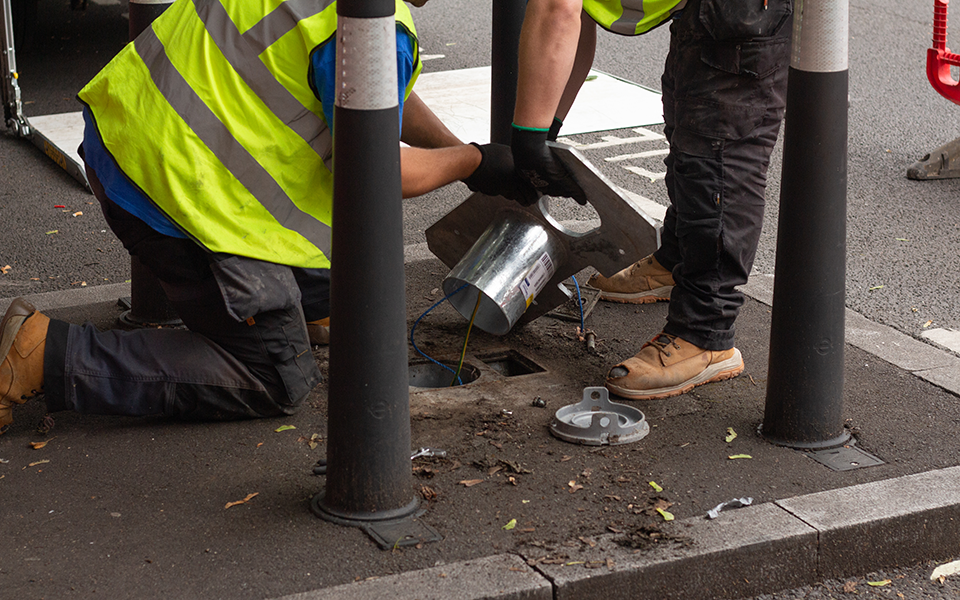
A key focus here was on cable entry, internal space, and installation sequencing. The open chamber design allows cables to be routed beneath the adaptor plate, which makes pulling cables significantly easier.
The chamber also allows 63mm, 110mm, and 177mm ducting, with entry from all four side walls. Importantly, internal cable management furniture can be retrofitted without excavation. All this means that future upgrades or changes can be made without disturbing the surrounding installation.
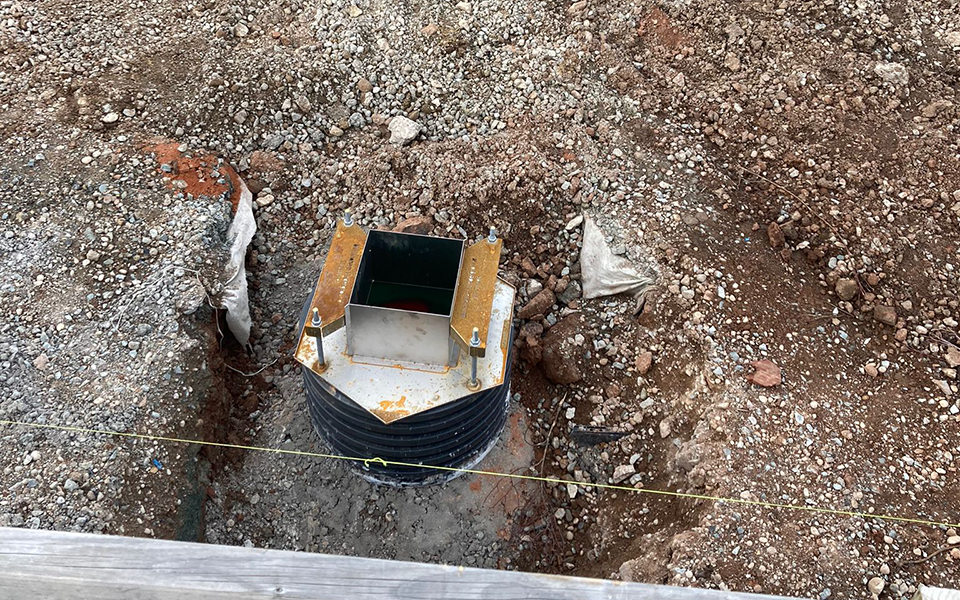
We also designed the system so foundations can be installed at the civils stage, prior to charger delivery if required. That separation between civils and electrical installation can help accelerate overall programme delivery.
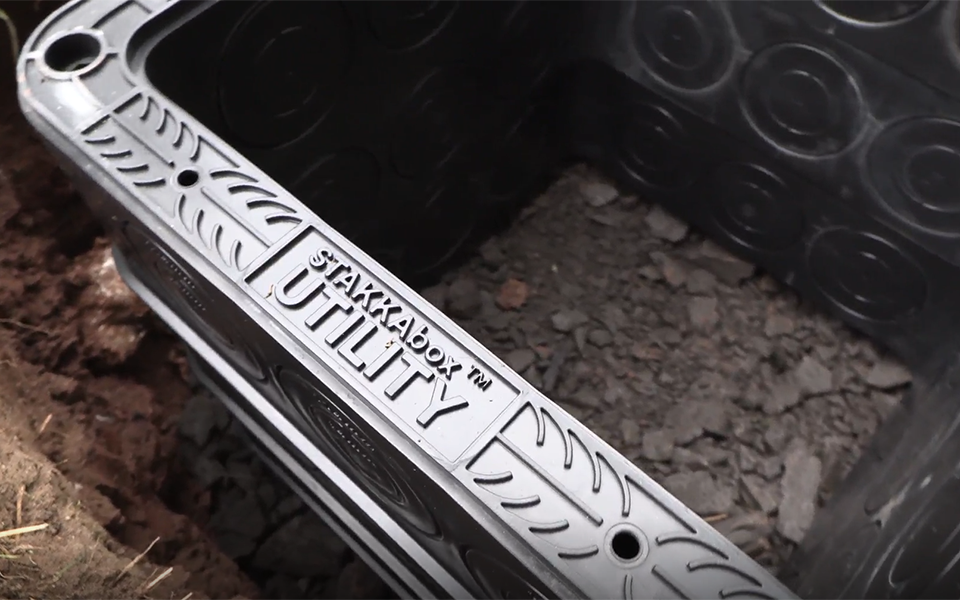
It’s also worth noting the setup for this solution. It uses a STAKKAbox™ Utility chamber with a bespoke steel adaptor plate. For teams on the ground, it really can’t get much simpler.
The chamber component is lightweight, modular, and quick and easy to adapt without specialist tools or lifting gear. The adaptor plate sits atop and will support any charging hardware.
Ultimately, EV Utility is designed to make installation easy, predictable, and repeatable.
Q: How did sustainability influence the solution?
Sustainability was considered from manufacturing to installation and end-of-life stages.
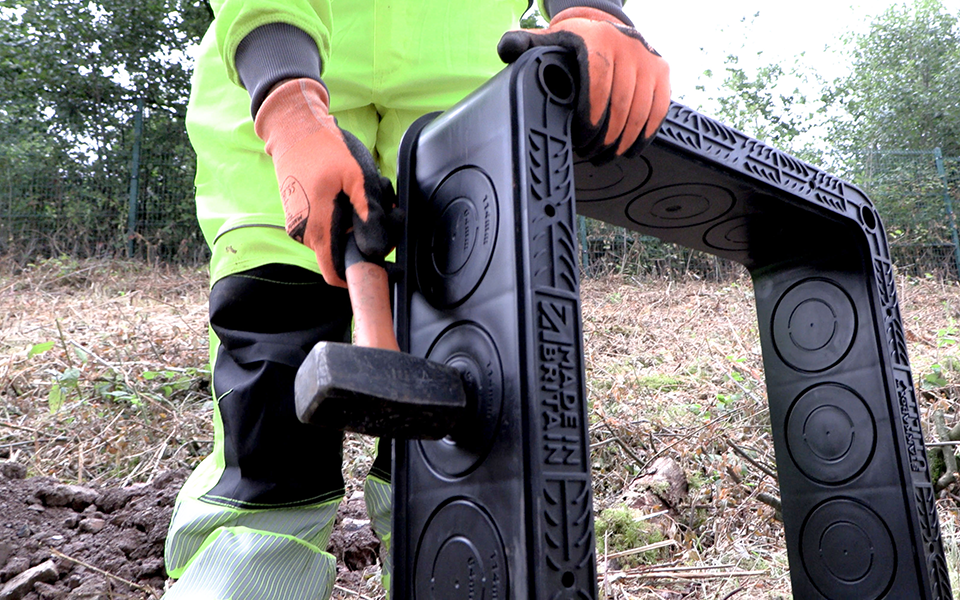
First, the product is made from modern materials achieving up to 100% recycled PP – manufactured right here in the UK.
The product can then be delivered to sites (from our UK manufacturing facilities) in lightweight, flat-packed shipments that reduce haulage footprint.
Once the solution reaches site, no heavy plant is required to manoeuvre it. And, once installed in the ground, no concrete is needed to backfill.
Last, all components are designed to be recyclable at end of life, supporting circular infrastructure principles.
As well as being simple and standardised, EV Utility also offers a more sustainable approach to EV foundations.
Meet our Product Designer
Next, for a deeper look at the technical design considerations behind EV Utility, we spoke to an employee who works in product design.
Q: What were the key performance requirements you had to design around?
One of the main challenges was creating a system that could be completely concrete-free while still delivering the performance required for EV infrastructure.
The speed and sustainability gains achievable with a lightweight composite chamber system – instead of a concrete foundation – would have been partially offset if the solution then needed to be backfilled with wet trades.
So, we had to reduce weight and simplify installation, while maintaining structural integrity and durability.
Using the STAKKAbox™ Utility chamber as the foundation platform helped us achieve that balance. The solution is tested to withstand a minimum vertical load of 40 tonnes (450mm² and 600mm²) and a 90 tonne load (800mm²) without the use of concrete surround for support.
Compliance with installation standards is always a central consideration too. For example, external walls are designed to be free from moulding voids, ensuring effective compaction in line with the New Roads and Street Works Act (1991).
By controlling manufacturing quality at this level, we help ensure consistent installation outcomes on site.
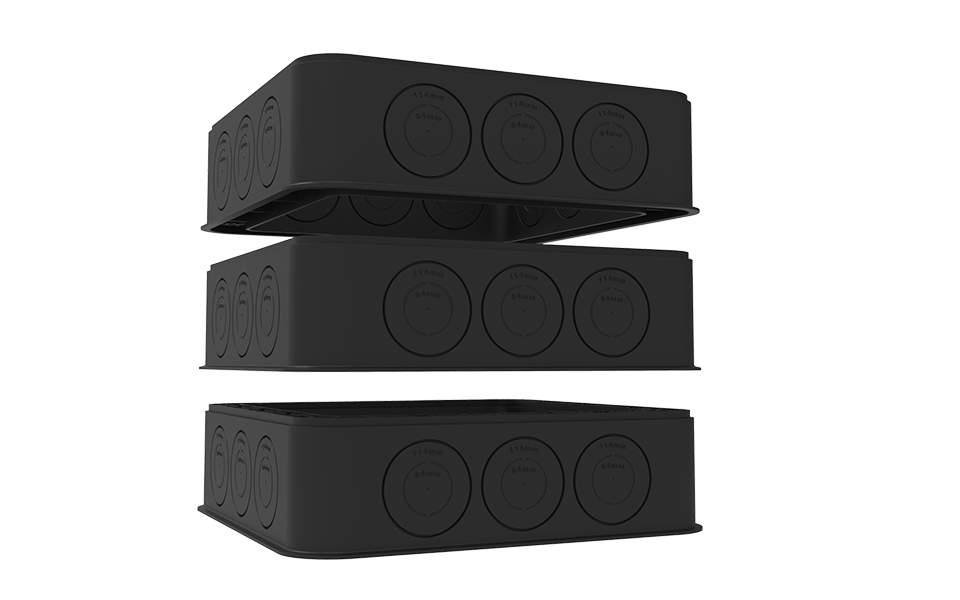
Q: How did you approach the chamber design to support both strength and installation simplicity?
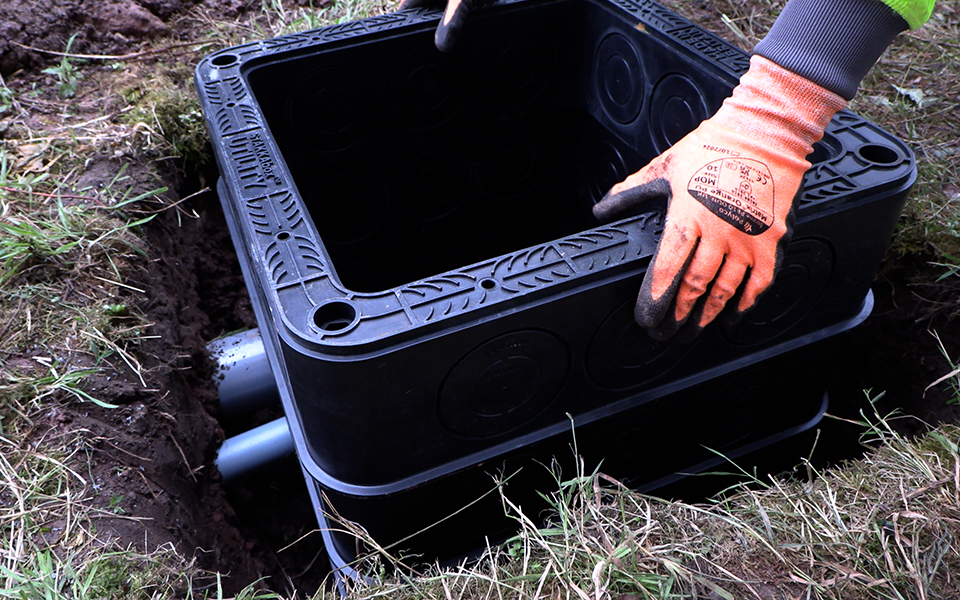
EV Utility uses 150mm deep twin-wall stackable sections, manufactured from thermoplastic or thermoset materials.
This design achieves two things: structural performance through the twin-wall design, and installation flexibility through ‘stackability’.
Installers can adjust chamber height during installation using 155mm riser sections, which allows the system to adapt to varying ground conditions without redesign.
We also ensured that chambers are not jointed at the corner, and that no mechanical fixing is required to achieve strength. Both factors further help ensure structural consistency and ease of installation.
Furthermore, we also incorporated four fully threaded stainless-steel rods for enhanced structural stability.
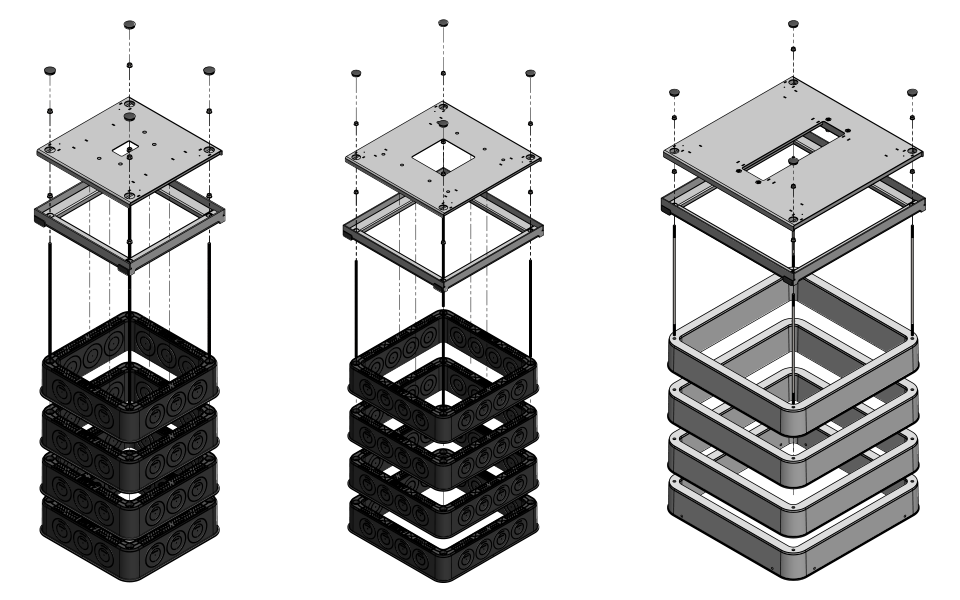
Q: How did you design the system to integrate with EV charger hardware?
The system includes a galvanised steel frame, blanking plate, and adaptor plate, designed to suit different charger manufacturers.
The steel frame is secured to the top of the chamber and supports a galvanised steel cover, integrated cable access point, and mounting interface for the charger unit.
We also incorporated a formed U Brace with 8 charger fixing points welded to the top plate. The design supports both M12 hex rivnut and M16 stud connector fixing point configurations.
This creates a stable interface between below-ground infrastructure and above-ground equipment.
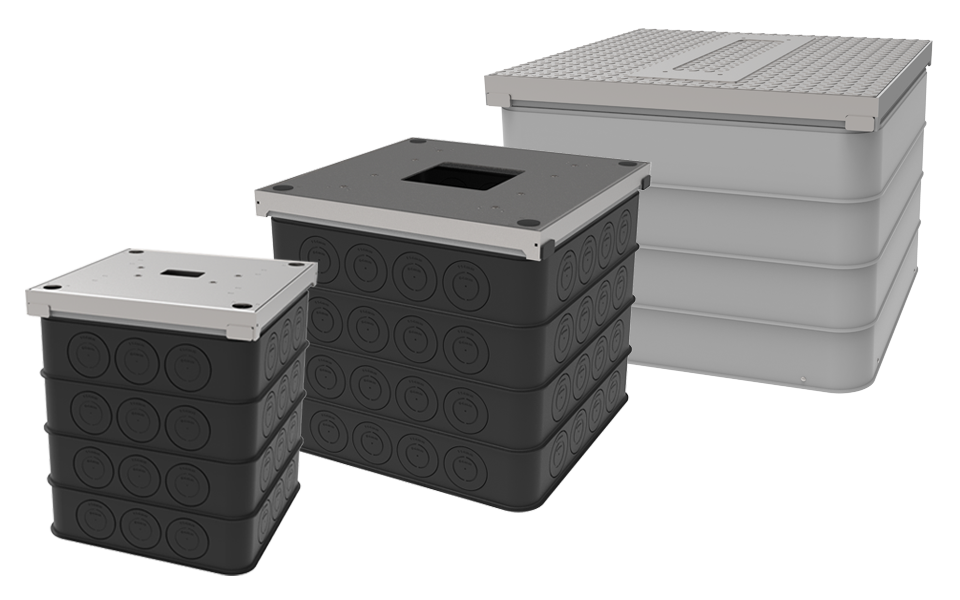
Q: What practical installation advantages does this product design deliver?
From an installation perspective, several design choices come together:
- The system can be installed without mechanical lifting equipment
- It can be installed flush to finished ground level, avoiding trip hazards
- No concrete surround is required
- Lightweight modular components simplify handling
These decisions reduce installation time, improve safety, and make the system more practical for repeat deployments.
Meet Luke Gibbs, EV Sector BDM
Finally, we spoke to Luke Gibbs, EV Sector BDM at NAL, to understand how EV Utility addresses customer needs.

Q: What challenges are customers raising with EV foundation installations?
A central theme we hear across EV rollouts is that customers are looking for ways to simplify installation.
Weight, handling, and installation complexity are common issues. Some traditional foundation approaches require lifting equipment or multiple components, which can slow projects down.
Customers are also looking for solutions that can be standardised across multiple sites – particularly for large rollout programmes.
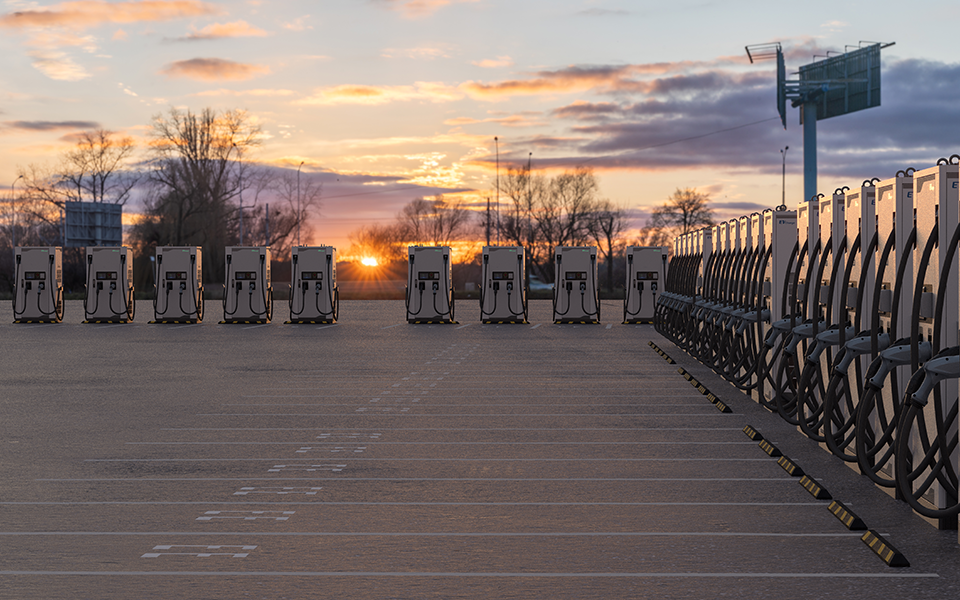
Q: Where do you see EV Utility delivering the biggest impact?
If you're installing multiple chargers across similar environments, a standardised foundation approach can significantly improve your efficiency.
EV Utility is a highly versatile solution that’s well-suited for public charging sites (such as large-scale forecourts, service stations etc). And, because it offers such simple installations, it’s also great for cost-sensitive projects with rapid rollout requirements.
Q: How does EV Utility fit within the wider NAL EV foundation range?
Retention socket foundations remain a key part of our offering. They offer maximum flexibility, longevity, shallow depth options, and a reduced footprint.
EV Utility complements that by offering a simplified, cost-effective option for more standardised deployments at scale.
By offering both solutions, we can support a wider range of project requirements. We’ve prepared some handy guidance and foundation comparisons for customers, and we’re also more than happy to work with customers to advise which solution is best-placed based on their specific installation scenario.
Q: What about its role within the broader market of concrete-based solutions?
Cast-in-situ and pre-cast concrete foundations have traditionally been the default because they’re familiar. However, they come with a lot of compromises.
For example, pre-cast foundations are extremely heavy, often requiring HIABs or cranes to deliver and install. All of which adds cost, logistics planning, and programme risk. Haulage emissions are high, handling on site is more complex, and cable management is restricted.
Cast-in-situ installations are weather-dependent; once cured, the hardware is secured to the concrete surface. This method works against futureproofing, as the foundation may not be suitable to accept an upgrade, and so it requires breaking out and re-casting.
EV Utility challenges that model. It delivers the structural performance required for EV infrastructure without the weight, plant, or wet trades. Being lightweight and flat-packed dramatically reduces transport costs and carbon footprint, and installers can handle it without lifting equipment. There’s no concrete surround, so installs are faster and cleaner.
From a cost perspective, when you factor in reduced haulage, no HIAB, faster installs, and lower labour requirements, EV Utility becomes highly competitive against concrete. From a sustainability perspective, the difference is even clearer. It’s UK-manufactured, uses up to 100% recycled materials, and is fully recyclable at end of life.
So the question increasingly becomes: why choose concrete at all for standard EV installations? EV Utility offers a modern, installer-friendly, and future-ready alternative that aligns far better with how EV infrastructure needs to be deployed today.
Simplifying EV infrastructure delivery
The development of EV Utility reflects a shift in how EV foundations can be approached. We’ve combined universal compatibility with consistent installation – at a highly competitive price point.
With EV Utility, you get a practical, lightweight foundation system designed around real-world EV infrastructure challenges. Get in touch to discuss how the solution could support your next project.