Concrete EV Foundations vs Composite
How does EV Utility stack up against traditional solutions?


To this day, EV charger installations still commonly rely on traditional concrete approaches. Whether that’s cast-in-place plinths or pre-cast concrete blocks, these solutions have often formed somewhat of a default foundation strategy across the industry.
But as deployment scales, the limitations of these methods are becoming harder to ignore. So, what happens when you step back and compare the options?
Here’s a comparison of EV Utility vs concrete foundations.
Exploring concrete EV foundations vs composite options
In this article, we’ll compare three EV foundation installation choices:
- Cast-in-situ foundations (site-cast poured concrete)
- Concrete blocks (pre-cast solutions)
- EV Utility (our new modular, composite universal EV foundation)
Each approach delivers the core requirement – supporting EV charging infrastructure – but how they achieve that varies significantly. We’ll start with an overview of each option.
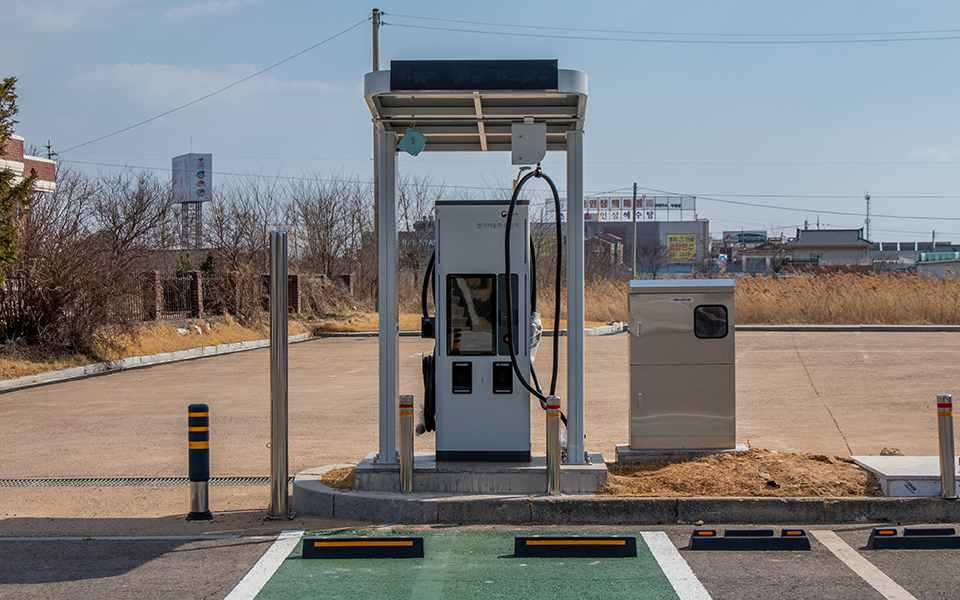
1. Cast-in-situ plinths
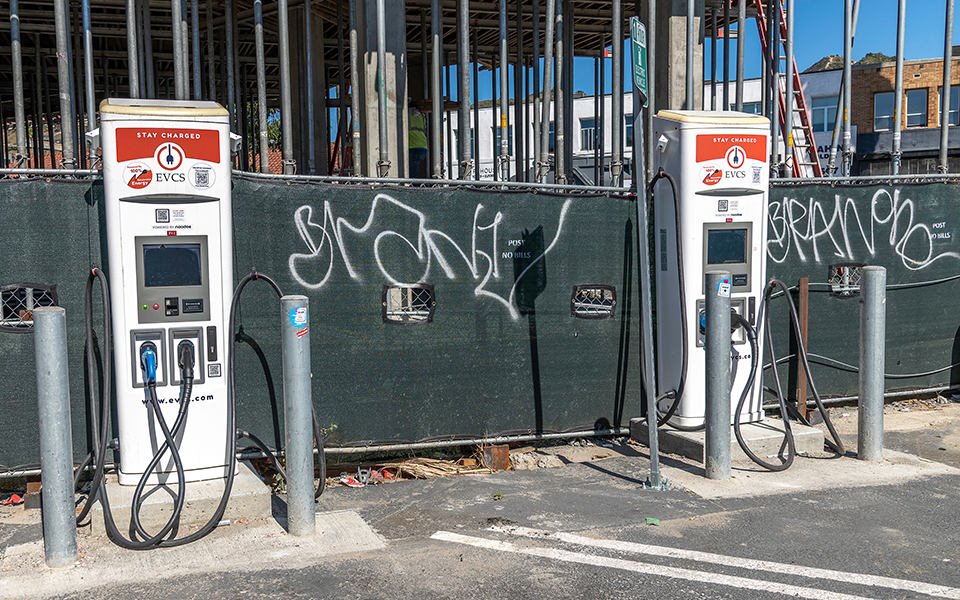
The traditional approach. Cast-in-situ foundations are built directly on-site using poured concrete. This method is cheap at point of install, it’s widely understood, and it requires minimal pre-planning.
However, the site-cast method introduces several challenges:
-
Requires on-site formwork and wet trades
From a programme perspective, pouring concrete on-site can create delays and uncertainty. Expect extended curing times before installation can continue.
-
Dependent on weather conditions
Rain, freezing temperatures, or poor ground conditions can all impact timelines – often pushing installations off schedule.
-
Labour-intensive and difficult to standardise
Pouring concrete is universally regarded as one of the most physically demanding, time-sensitive, and labour-intensive jobs in construction. It requires heavy manual labour for site preparation, transporting material, placing, and finishing. You’ll often also need a large team to avoid the concrete setting prematurely.
-
More expensive long-term due to inflexibility
Once installed, adaptability is limited. Any future upgrade or change may require breaking out and recasting the foundation. (And thereby adding further disruption and cost.)
2. Pre-cast concrete blocks
Pre-cast concrete foundations were developed to address some of the challenges of cast-in-place methods. They’re certainly cleaner and faster.
Concrete block foundations will arrive on site fully cured and ready to install. In turn, this removes the need for on-site pouring, subsequent curing time, and any weather-dependent delays.
They also introduce a level of standardisation. With pre-cast concrete EV foundations, you’re getting a more repeatable installation than you’d get with site-cast methods.
However, while pre-cast blocks do improve speed, they also introduce a different set of challenges. Most notable is weight.
Pre-cast solutions mean:
-
Extremely heavy units, requiring HIABs or cranes
Concrete blocks aren’t safe for manual handling. You’ll need machinery to manoeuvre units, which also requires extra skill on-site to get the job done. While appearing simple, weight always introduces more complex handling and installation.
-
Increased haulage costs and logistical planning
From a cost perspective, the need for lifting equipment and transport can quickly offset the time savings gained from pre-casting.
-
Higher associated carbon footprint from transport
You can’t conveniently flat-pack a solid block of pre-cast concrete. Nor do pre-cast concrete EV foundations have a lightweight haulage footprint. Weight always introduces sustainability challenges when it comes to transport.
-
Limited adaptability
Pre-cast solutions are often positioned as “future-proof”. (Supporting upgrades through adaptor plates.) However, this adaptability still has limits. If site conditions change or requirements evolve, modifications might involve working around (or removing) a fixed concrete structure.
3. EV Utility
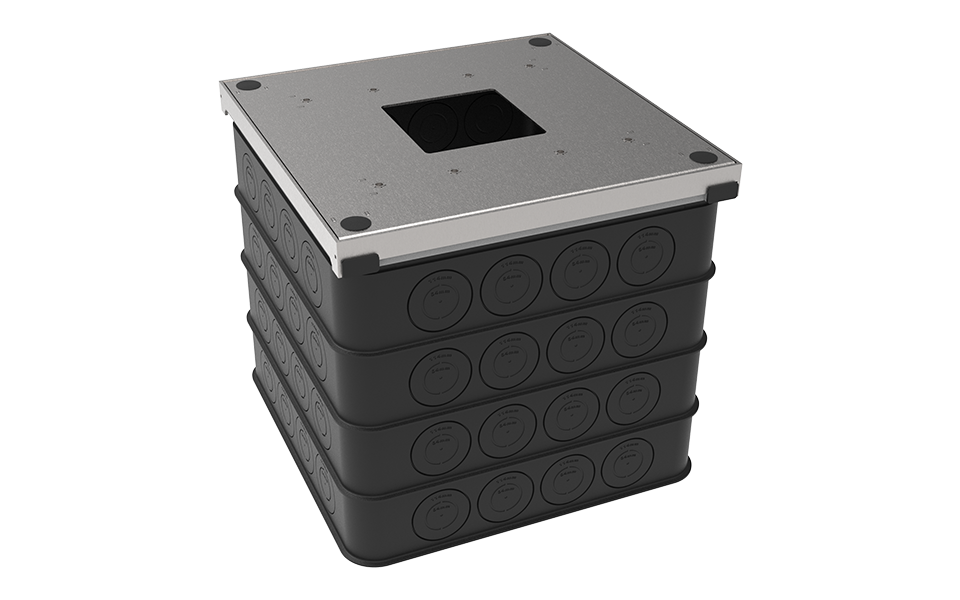
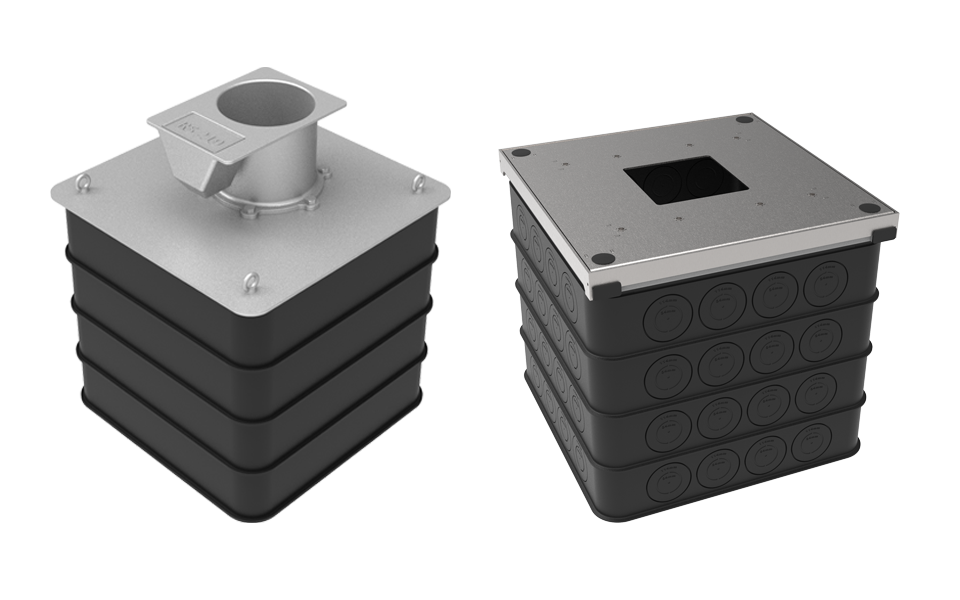
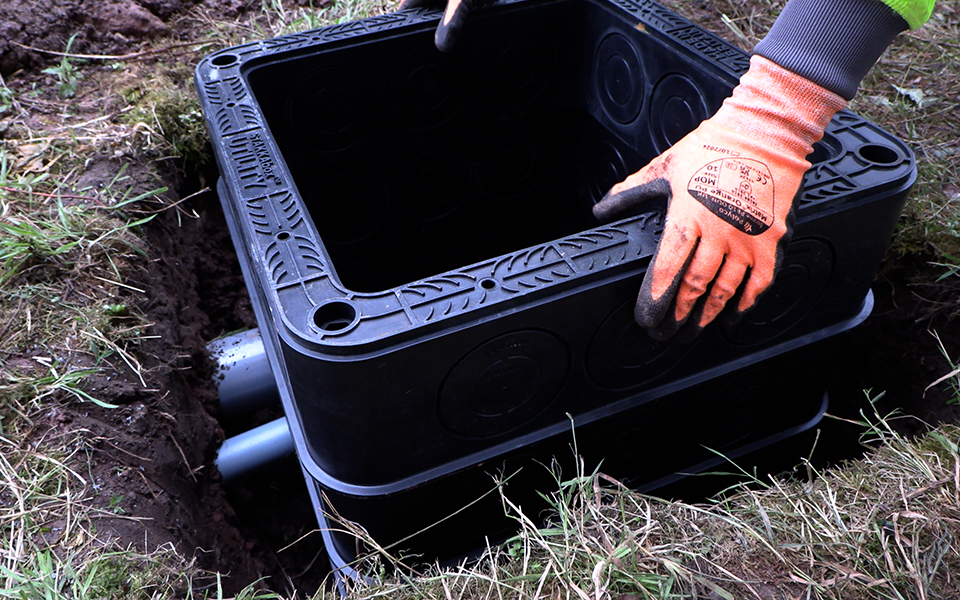
EV Utility presents a modern, modular approach to EV foundations. Rather than relying on concrete, it uses a lightweight modular chamber system combined with a bespoke steel adaptor plate to deliver the required foundation performance.
This shift in approach addresses many of the challenges associated with concrete-based solutions. We’ve explored several key categories below.
-
Installation and handling:
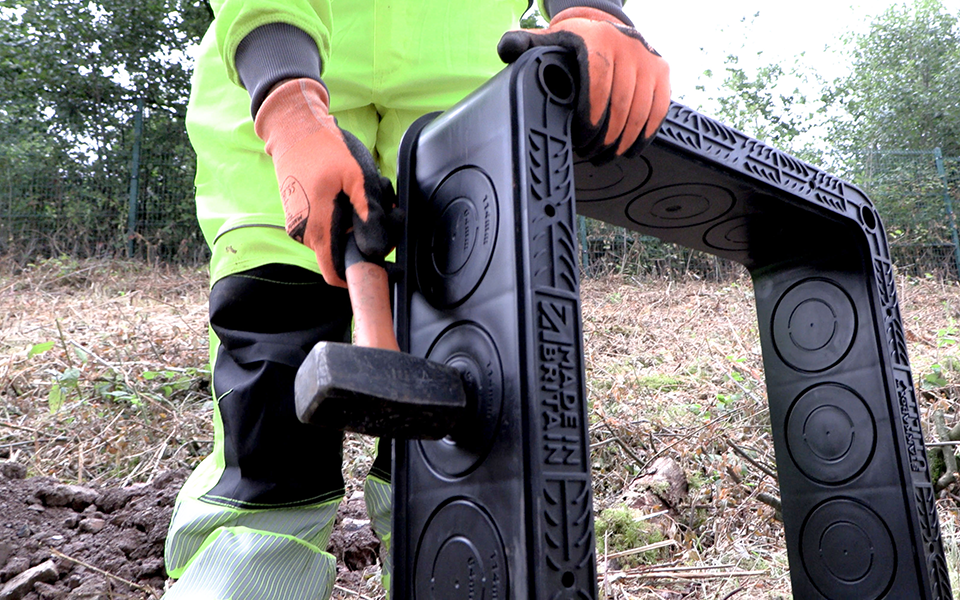
- Lightweight components (under 25kg)
- No HIAB or lifting equipment required
- Flat-packed for efficient transport
- Fast, manual installation
- Significantly reduces both logistical complexity and installation risk.
-
Programme efficiency
- No curing time
- No wet trades
- No weather dependency
- No concrete surround required
- Installations can be completed quickly and consistently
- Supports faster rollout at scale
-
Cost considerations
- Flat-packable and offering lighter transport
- No lifting equipment requirements (HIAB/crane)
- No additional labour required
- Faster, deskilled installs
- Highly competitive total installed cost
-
Sustainability
- Manufactured using up to 100% recycled polypropylene
- Non-carbon intensive material production
- Low transport emissions
- Concrete-free installation
- Lightweight design, reducing transport emissions
- Fully recyclable at end of life
- UK manufacturing, supporting reduced supply chain impact
-
Flexibility and future-proofing
- A universal system compatible with any charging unit
- Fully adaptable in time as hardware evolves
- Open internal chamber for cable routing
- Compatible with 150mm ducting
- Flexible cable entry (central or offset)
So, why choose concrete?
Concrete solutions are familiar, widely understood, and in some cases may align with existing specifications or project preferences.
But as EV rollout accelerates, the needle is increasingly moving. Do concrete EV foundations align with how infrastructure needs to be delivered today? The limitations of concrete-based approaches become more apparent when you factor in:
- Weight and handling
- Installation speed
- Logistics and cost
- Sustainability
- Scalability
By comparison, EV Utility challenges the assumption that foundations need to be heavy, complex, and concrete-based. Instead, our universal EV foundation solution offers:
- A lighter solution
- A simpler installation process
- A more scalable approach to deployment
- A lower-impact alternative from both cost and environmental perspectives
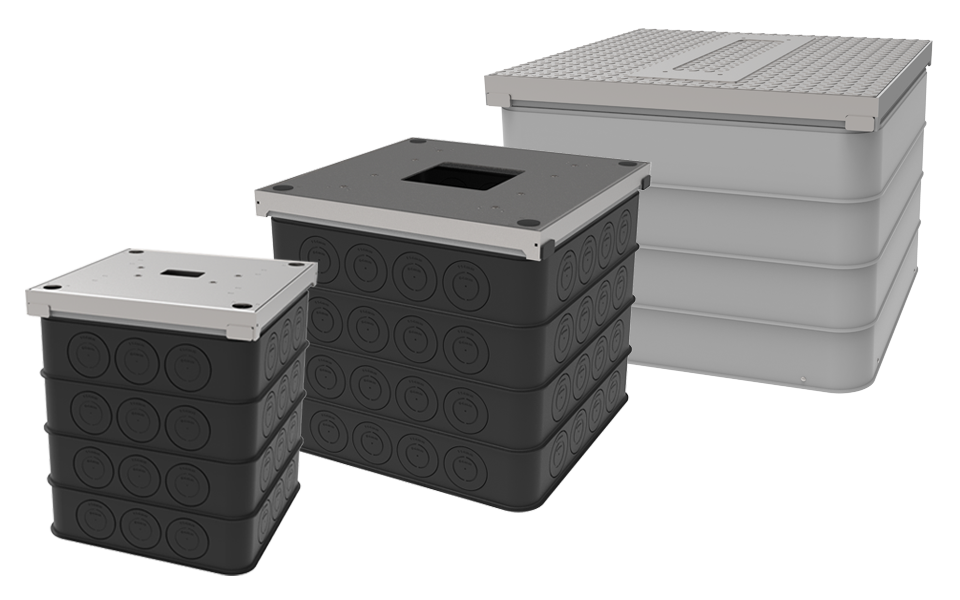
The future of EV foundations
As EV infrastructure continues to scale, efficiency, repeatability, and sustainability will become increasingly important. Concrete solutions helped establish the market. But now, newer approaches like EV Utility are helping to move it forward.
For many standard EV installations, the question is no longer: “Which concrete solution should we use?” The question is now: “Do we need concrete at all?”
EV Utility is an entirely concrete-free universal EV foundation. It now sides alongside our premium retention socket based EV solution – offering contractors two modern approaches to foundations.