

From Europe’s EV rollout to traffic upgrades:
Three lessons from Intertraffic


Europe is investing heavily in EV charging and transport modernisation. Roadside infrastructure is entering a new phase – shaped by:
With ~3 million new public charging points required by 2030.
The rise of smart, low-carbon solutions in urban planning.
(Such as New European Bauhaus) that aim to make street furniture more sustainable, inclusive, and resilient.
To deliver projects faster and with lower whole-life cost.
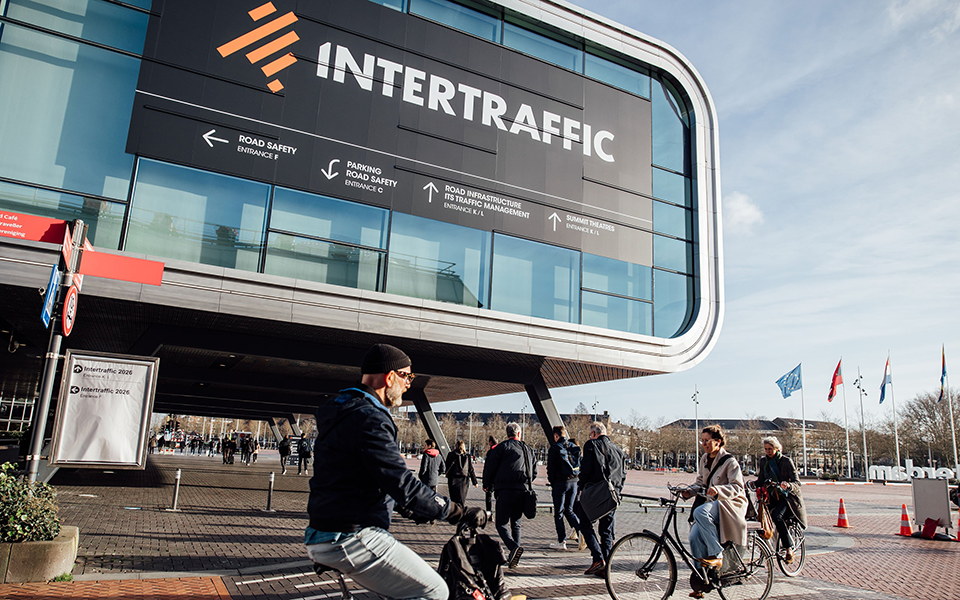
At such an exciting time for the EU market, we went to Intertraffic Amsterdam 2026 to chat with EU authorities, contractors, and distributors. Here are the three biggest takeaways we heard on the ground.
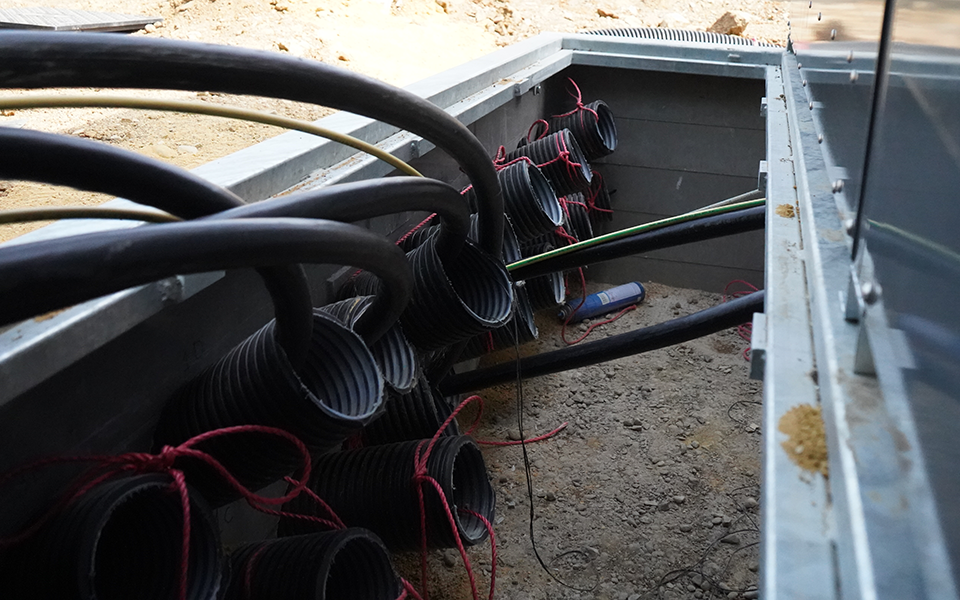
1. EV rollout is accelerating, but civils often prove a bottleneck
There’s no shortage of momentum behind EV charging programmes across Europe. Cities and regions are scaling networks rapidly, often under ambitious timelines tied to funding windows and policy targets.
But while charging hardware has continued to evolve, foundations and civils haven’t always kept pace. We heard repeatedly that:
- Traditional foundations (involving concrete pouring and long curing times) slow progress on live sites
- While pre-cast foundations offer an alternative, their weight and inflexibility on-site still demand additional plant and HIABs
- Replacing upgraded charge units to keep pace with the developing technology often causes rework and additional civils
In short: it’s not the hardware that’s holding projects back, but rather what happens below ground.
Foundations dictate how quickly assets can be installed, how much disruption is caused during works, and how easily sites can be revisited later. These below-ground considerations are essential as EV rollout accelerates.
Increasingly, infrastructure systems that reduce concrete, simplify alignment, and support faster installation are becoming essential rather than optional.
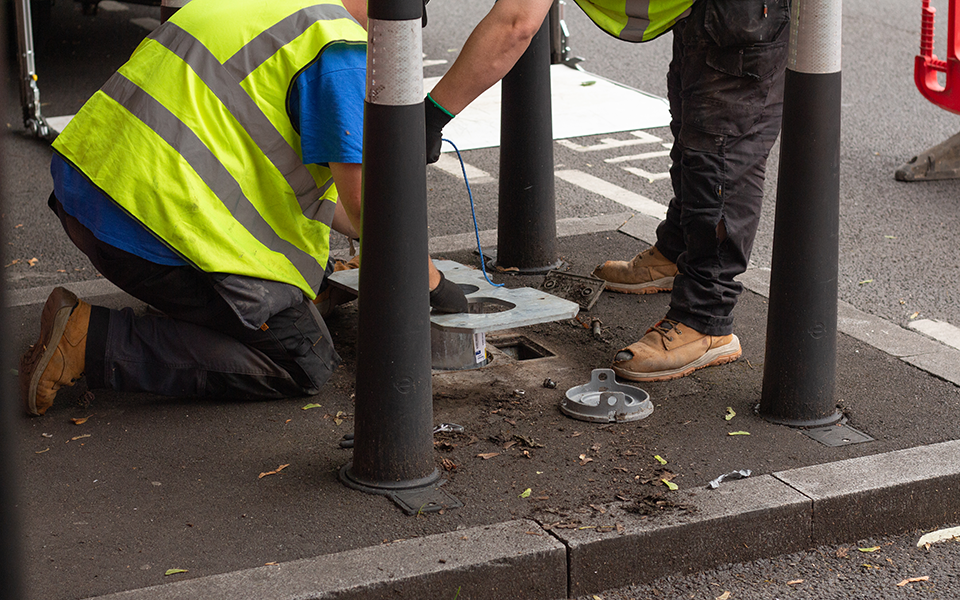
2. Infrastructure must be built for change
A second clear theme from our Intertraffic conversations was lifecycle thinking.
Authorities and asset owners are no longer focused solely on getting equipment in the ground. Whole-life cost is now front of mind. With that in mind, they’re increasingly asking questions about what happens next:
- How easy is it to upgrade equipment?
- What does maintenance look like over the next few decades?
- Will future changes require breaking out civils?
EV technology will continue to evolve. Traffic systems will continue to be upgraded. Street furniture will be replaced. All that is inevitable, but what’s now changing is expectations around adaptability.
Infrastructure that locks assets into fixed concrete foundations is increasingly seen as a liability. Instead, there’s growing demand for systems that allow equipment to be removed, replaced, or upgraded without rebuilding the surrounding civils. In turn – over the asset’s lifetime – this reduces disruption, cost, and environmental impact.
This shift toward modular, upgradeable foundations reflects a broader move across Europe: designing infrastructure with flexibility and futureproofing in mind.
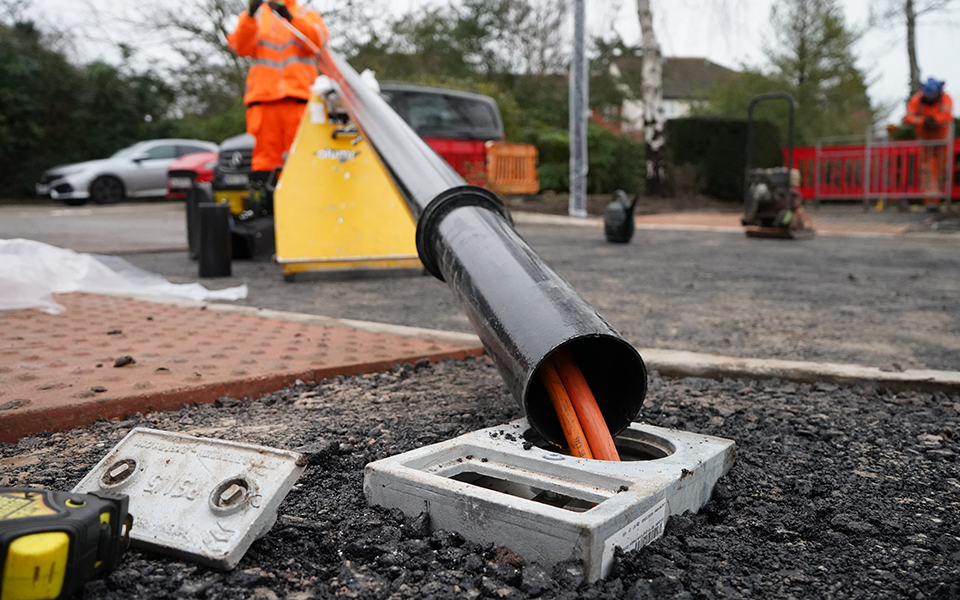
3. Installation reality is now driving design decisions
Perhaps the most consistent feedback came from contractors and delivery teams. Projects are being delivered under tighter programmes, with fewer skilled resources available, and in increasingly complex environments. That’s changing what ‘good design’ looks like.
Installers told us they’re looking for:
- Simpler civils with reduced concrete
- Easier cable access and routing
- Solutions that can adapt to on-site conditions
- Systems that don’t require heavy machinery for routine installs
- Prioritised health and safety
There’s a clear move away from heavy, over-engineered solutions toward lighter, more practical infrastructure. Lightweight manual handling, deskilled installations, and faster on-site assembly are now considered the modern approach.
The headline here is that design is no longer just about structural performance alone. Increasingly, usability in the field is a design priority.
What this means for Europe’s roadside infrastructure
Taken together, these three themes point to a fundamental shift. Europe’s EV and traffic programmes now demand infrastructure that is:
- Faster to install
- Easier to maintain
- Adaptable to future change
This, then, is where modular roadside systems come into their own – reducing civils, improving access, and enabling upgrades without repeated groundworks.
That’s just where NAL can help. We bring a lifecycle-led and installer-first approach to infrastructure solutions across traffic and EV applications. Intertraffic reinforced that these priorities are from niche – they’re becoming standard expectations across European projects.
Continuing the conversation
Thank you to everyone who took the time to speak with us in Amsterdam. We’re now following up with authorities, contractors, and prospective partners across Europe.
If you’d like to continue the conversation around smarter roadside foundations, future-ready infrastructure, or partnership opportunities, we’d welcome hearing from you.